 Garden Forward
Practice guide
Watering a small garden efficiently: what the evidence supports
Efficient watering beats more watering. Here is what extension services and the FAO actually show.
Garden Forward editorial team · Published 2026-05-06 · Fact-checked 2026-09-17 · Global
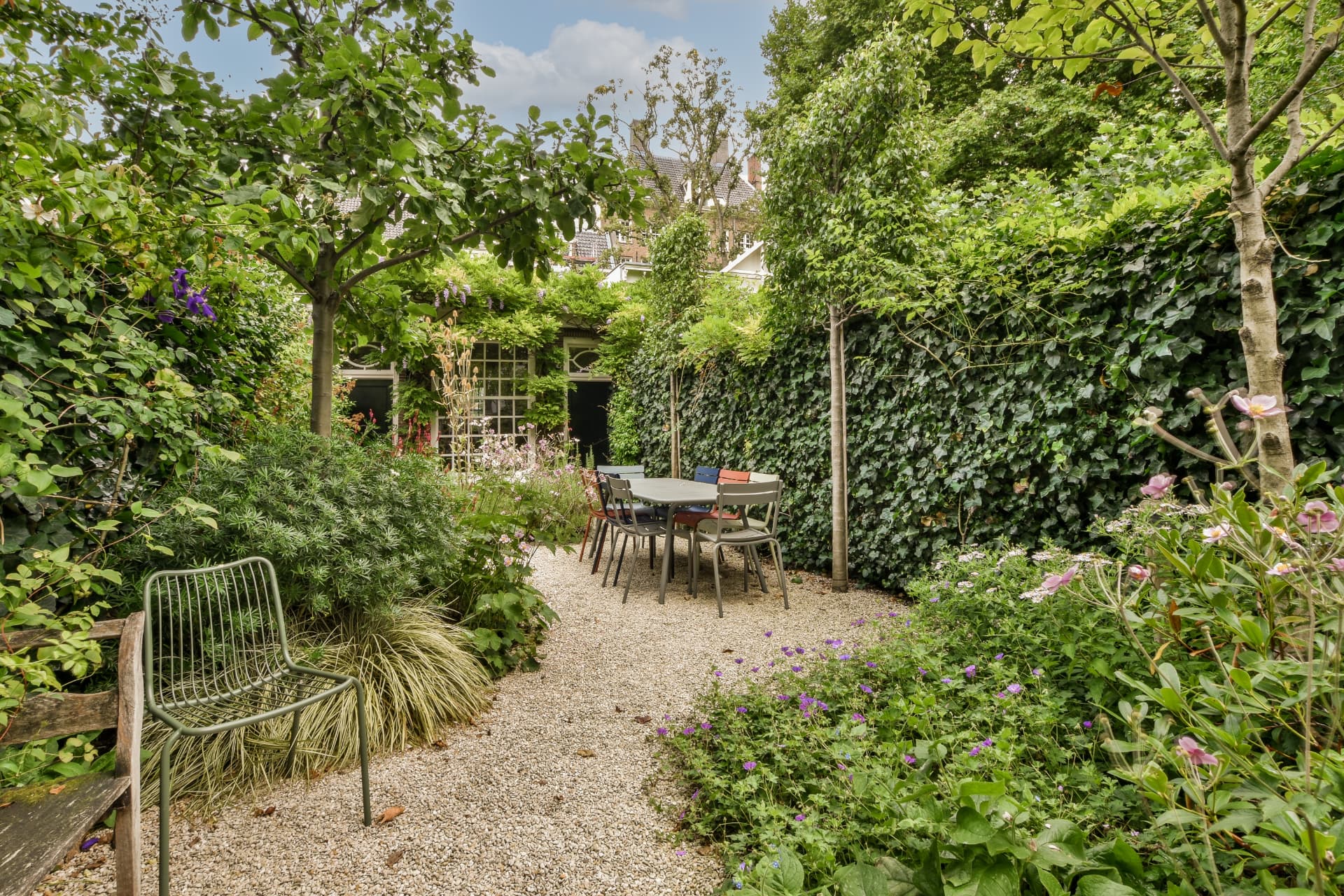
Timing is the cheapest saving available. Clemson University's Extension service puts daytime irrigation losses to evaporation and drift at 20–30% depending on humidity, wind and temperature — an inch applied in the middle of the day can deliver the benefit of about 0.7 inches.
The same guidance notes that evapotranspiration peaks between 10 am and 4 pm, and recommends watering after nightfall, finishing early enough before sunrise that foliage dries normally. Michigan State University Extension prefers early morning where overhead watering is unavoidable, for the same evaporation reason plus faster leaf drying and lower disease pressure.
Delivery method matters next. The University of Minnesota Extension describes drip irrigation as the most efficient way to irrigate crops: water goes to the root zone, evaporation loss falls, canopy humidity and standing water drop, and pump pressure requirements are lower. The FAO's Climate-Smart Agriculture catalogue makes the same point about reducing evaporation and runoff losses.
We deliberately do not quote a single headline percentage for drip versus sprinkler efficiency. The figures widely circulated for that comparison come from secondary and marketing sources; we could not trace them to a primary FAO or extension table at garden scale, so we describe the difference qualitatively instead.
For a small garden the practical kit is modest: a timer, a pressure reducer and enough dripline to cover the beds, run deeply and infrequently so roots grow downwards. Watering deeply and less often, rather than lightly every day, is the recommendation extension services repeat most consistently.
Garden Forward publishes no prices and holds no affiliate agreement, so nothing on this page earns us a commission or influences which method we recommend.
Evidence and sources
Factual claims were checked against the sources below on 2026-09-17. Links open the original evidence.
Related in your garden
Apply this to my gardenGarden Forward editorial content. Climate figures, plant status and safety claims are checked against the cited evidence. General guidance cannot account for every site condition; use local regulations and professional advice where drainage, structures, safety or restricted species are involved.