 Garden Forward
News explainer
What London gardens may need to change by 2040
Hotter extremes and a longer growing season are already reshaping what performs reliably in the capital.
Garden Forward editorial team · Published 2026-09-17 · Fact-checked 2026-09-17 · London, United Kingdom
This article has been corrected since publication.
- 2026-09-17: Rewritten during the September 2026 evidence review. Figures that could not be traced to a named Met Office or UKCP source were removed, and the remaining projections are now stated as ranges under a named scenario rather than as single values.
- Heat
- Drought and water
- United Kingdom
Global baseline coverage. Measured climate and plant suitability work worldwide. Written guides, status registers and seller links are currently deeper for the UK, US and Australia.
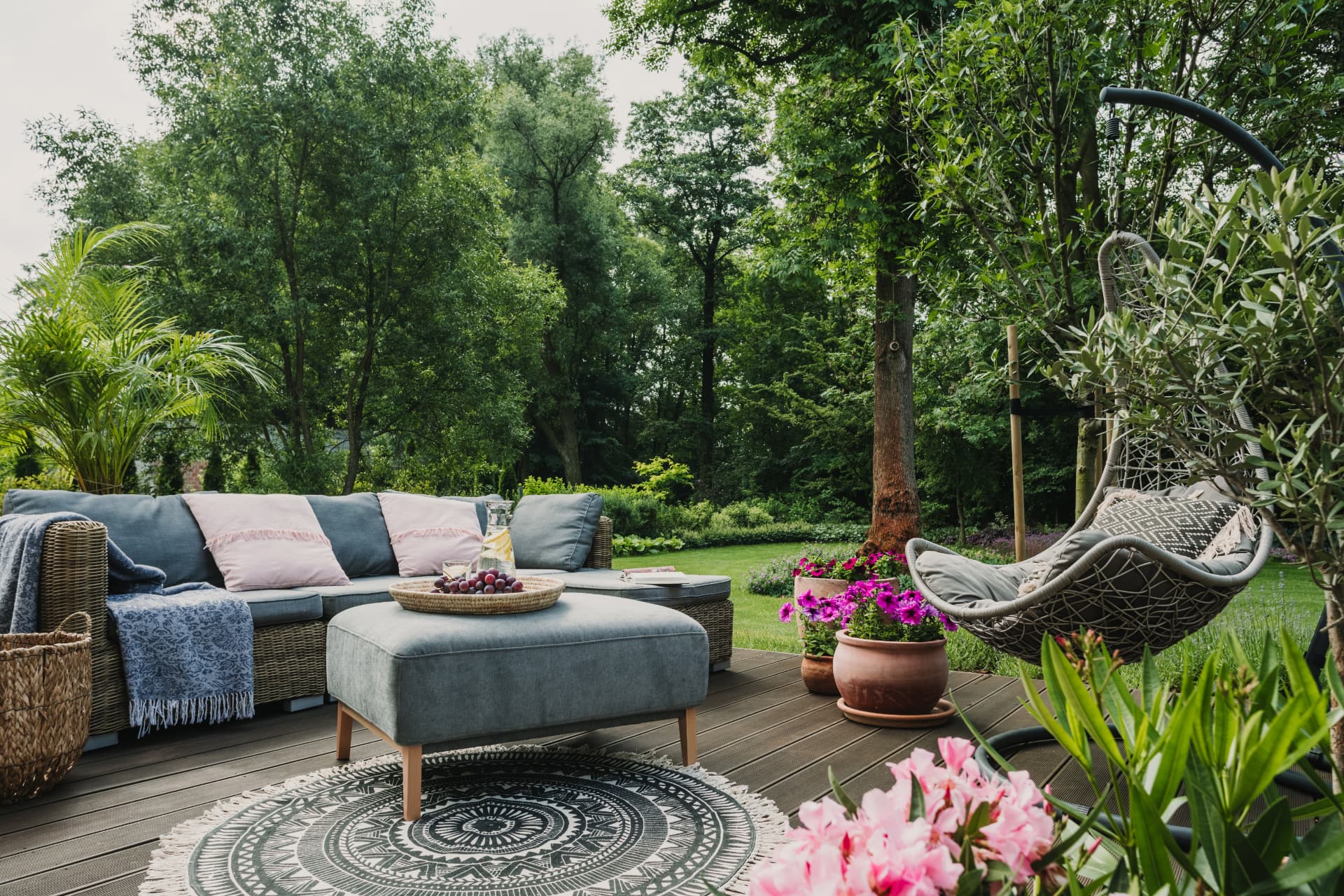
Image: Shutterstock · Shutterstock standard licence · Licensed for use on Garden Forward. Not for redistribution or resale.
London gardens do not experience the national climate. Measurements of the city's urban heat island have recorded night-time differences of more than 7°C between central Westminster and rural reference sites, and a separate study logged a maximum night-time urban heat island of 8.6°C under clear, still conditions.
The extremes are moving fastest. The Met Office's State of the UK Climate reporting shows the 2016–2025 decade running 1.33°C warmer than 1961–1990, and days above 30°C and nights above 18°C in Greater London more than quadrupling over that comparison. Across a band from Kent to Lincolnshire, the average hottest day of the year has warmed by more than 4.5°C.
For the wider South East, UKCP18 indicates summer temperatures rising a further 3–4°C relative to a 1981–2000 baseline at a 2°C global warming level, with the broad pattern being warmer, wetter winters and hotter, drier summers. There is no single headline figure for London's 2040 summer rainfall change; those projections are published as scenario ranges per grid cell, not as one number.
Rain, when it comes, is arriving harder. Met Office convection-permitting modelling published in 2023 found that hourly rainfall above 20 mm — the intensity that causes flash flooding — could become four times as frequent by the 2070s under a high-emissions pathway.
The growing season is longer. Met Office analysis of the Central England Temperature series put the 2006–2015 average thermal growing season at 280 days, 29 days longer than the 1961–1990 average of about 252 days.
None of that means replacing everything. It means shifting the balance: deeper-rooted and silver-leaved planting, more canopy shade from established trees, better soil, and storage so that intense rainfall is caught rather than lost. In 2025 ten water companies imposed temporary use bans covering more than 28 million people, which is the practical reason to design for a garden that survives without a hose.
Long-range projections are ranges, not forecasts. Treat them as a direction of travel and make changes that also pay off in today's climate.
Evidence and sources
Factual claims were checked against the sources below on 2026-09-17. Links open the original evidence.
- Met Office — State of the UK Climate
- Wilby — Past and projected trends in London's urban heat island
- Met Office — UKCP18 derived projections factsheet
- Kendon et al. (2023), Nature Communications — increasing frequency of extreme rainfall
- Carbon Brief / Met Office — England's growing season almost a month longer
- Water UK — Fifty years on from 1976
Related in your garden
Apply this to my gardenWhat to do next
- Deep-water new planting before the warm spellRecently planted roots are shallow and dry out first. · Next 3 days
- Check container reservoirs twice daily in heatContainers can dry out within hours above 30°C. · During hot spells
- Shade young plants during extreme heatTemporary shade cloth prevents scorch on establishing plants. · During heatwaves
Related reading
Matched on the tags a person gave each guide — climate pressure, task and region.
- Shade-first gardening in PhoenixWhy: same pressure: heat, drought and water
- How to create a drought-resilient garden in MelbourneWhy: same pressure: drought and water, heat
- Watering a small garden efficiently: what the evidence supportsWhy: same pressure: drought and water, heat
Where to go from here
Create a Garden Profile and this guidance becomes specific to your place.
- Create my garden
Five short questions; answers stay on your device.
- Check my climate
The measured record behind every recommendation.
- Build my action plan
Seasonal actions ranked for your conditions.
Report a problem with this article
Reports are reviewed by a person. A single report never changes the recommendation rules on its own.
A person reads every report. See our corrections and editorial standards, including how to request a takedown.
Garden Forward editorial content, written and reviewed by a person — never published automatically. Climate figures, plant status and safety claims are checked against the cited evidence. General guidance cannot account for every site condition; use local regulations and professional advice where drainage, structures, safety or restricted species are involved.