 Garden Forward
News explainer
Native or climate-suitable? They are not the same thing
A plant that copes with your future climate is not automatically good for your local ecology — or legal to plant.
Garden Forward editorial team · Published 2026-09-17 · Fact-checked 2026-09-17 · Global
- Wildlife
- Heat
- Anywhere
Global baseline coverage. Measured climate and plant suitability work worldwide. Written guides, status registers and seller links are currently deeper for the UK, US and Australia.
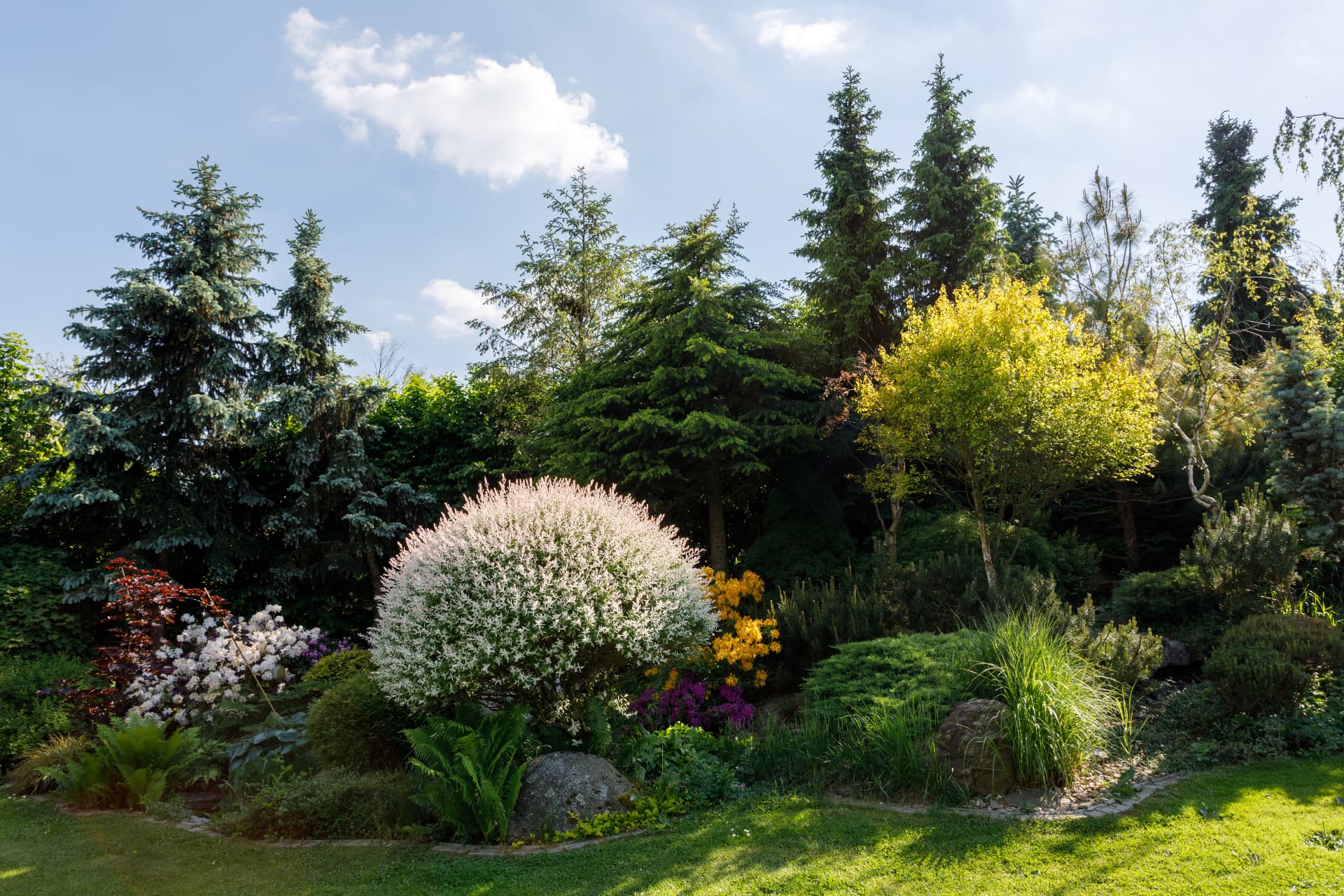
Image: Shutterstock · Shutterstock standard licence · Licensed for use on Garden Forward. Not for redistribution or resale.
Native status is a question of geography and ecological history. Climate suitability is a question of tolerance. Garden Forward keeps the two labels separate and never infers native status from climate similarity.
The ecological evidence supports weighting towards natives without treating everything else as worthless. The RHS's four-year Plants for Bugs field experiment at Wisley, using 36 plots of native, near-native northern-hemisphere and exotic southern-hemisphere planting, concluded that planting biased towards British natives — combined with dense vegetation and some bare soil — best supports invertebrates, while near-native and exotic plants still played a positive role, particularly for winter cover and extending the forage season.
The published pollinator results are more specific: total pollinator abundance was higher on native and near-native plots than exotic ones, hoverflies were most abundant on native plots, honeybees on near-native plots, and long-tongued bumblebees showed no difference between treatments. For context, RHS baseline data put an average UK garden at roughly 70% non-native and 30% native planting excluding lawn.
The legal side is separate again, and jurisdiction-specific. In Britain, section 14 of the Wildlife and Countryside Act 1981 makes it an offence to plant or cause to grow in the wild any plant listed in Schedule 9 Part II. In the United States, the Plant Protection Act defines a noxious weed by the injury it causes and USDA APHIS maintains a Federal Noxious Weed List under 7 CFR 360.200. In Australia there is no single national list: declarations sit with the states, such as Victoria's four categories under the Catchment and Land Protection Act 1994.
These regimes are not equivalent and should not be paraphrased as one rule. What they share is a practical consequence for this site: any species listed as invasive or restricted in your jurisdiction is excluded from our recommendations entirely, however well it would handle your climate.
Evidence and sources
Factual claims were checked against the sources below on 2026-09-17. Links open the original evidence.
Related in your garden
Apply this to my gardenWhat to do next
- Sow hardy annuals for pollinatorsExtends the nectar sequence at low cost. · Next 4 weeks
- Deep-water new planting before the warm spellRecently planted roots are shallow and dry out first. · Next 3 days
- Top up mulch to 7 cmMulch cuts surface evaporation substantially through summer. · This month
Related reading
Matched on the tags a person gave each guide — climate pressure, task and region.
- Native plants for a wet and shaded garden in GeorgiaWhy: same pressure: wildlife
- How our climate analogues are calculated — and what they are notWhy: same pressure: heat
- How to create a drought-resilient garden in MelbourneWhy: same pressure: heat
Where to go from here
Create a Garden Profile and this guidance becomes specific to your place.
- Create my garden
Five short questions; answers stay on your device.
- Check my climate
The measured record behind every recommendation.
- Build my action plan
Seasonal actions ranked for your conditions.
Report a problem with this article
Reports are reviewed by a person. A single report never changes the recommendation rules on its own.
A person reads every report. See our corrections and editorial standards, including how to request a takedown.
Garden Forward editorial content, written and reviewed by a person — never published automatically. Climate figures, plant status and safety claims are checked against the cited evidence. General guidance cannot account for every site condition; use local regulations and professional advice where drainage, structures, safety or restricted species are involved.