 Garden Forward
Plant guide
Native plants for a wet and shaded garden in Georgia
Humid heat and heavier downpours make drainage, not drought, the defining problem for many Atlanta gardens.
Garden Forward editorial team · Published 2026-09-17 · Fact-checked 2026-09-17 · Georgia, United States
- Heavy rain and wet soil
- Wildlife
- United States
Global baseline coverage. Measured climate and plant suitability work worldwide. Written guides, status registers and seller links are currently deeper for the UK, US and Australia.
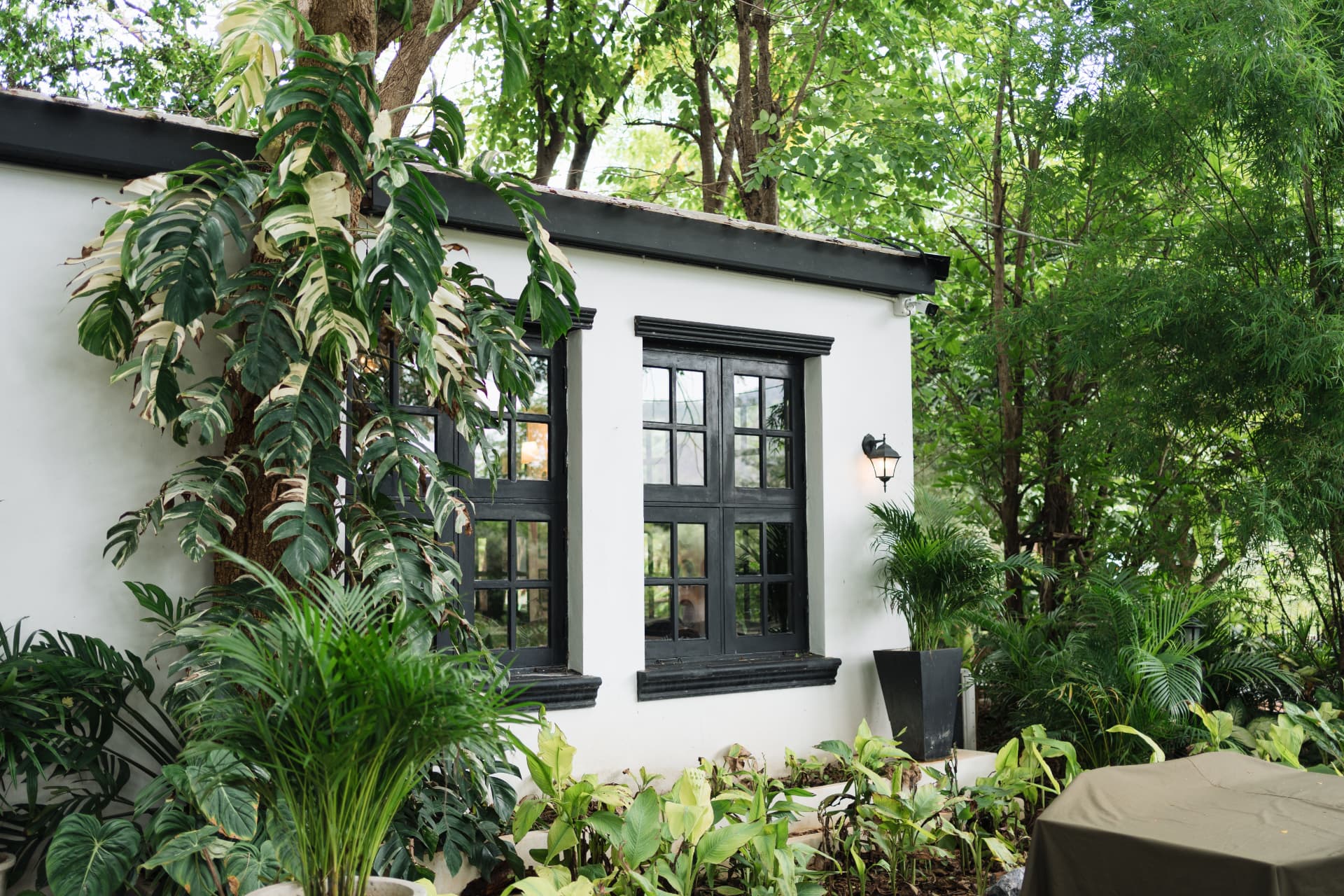
Image: Shutterstock · Shutterstock standard licence · Licensed for use on Garden Forward. Not for redistribution or resale.
Atlanta is wet by North American standards: NOAA's 1991–2020 normals for Hartsfield-Jackson put annual precipitation near 49 inches, about 1,250 mm, with a mean annual temperature around 63°F.
The pattern of that rain is changing. A 2018 analysis in the International Journal of Climatology found that intense precipitation events at the 99th percentile increased in both frequency and magnitude across the southeastern United States between 1950 and 2016, with the strongest increases inland from the Atlantic Coastal Plain. The Fifth National Climate Assessment's Southeast chapter documents the same rising extreme-rainfall and flooding risk.
Winters are shifting too. The USDA's updated Plant Hardiness Zone Map, published on 15 November 2023 and built from 1991–2020 extreme minimum winter temperatures at 13,412 stations, moved most of the Southeast half a zone warmer; Atlanta now reads 8a to 8b rather than 7b to 8a. The map measures the average coldest night of the year, not general warming, and a single severe cold snap — as in December 2022 — can still occur.
In practice, shaded low points in Atlanta gardens now stay saturated for longer between heavier storms. Southeastern natives adapted to woodland edge and floodplain conditions handle that cycle far better than imported ornamentals: sweetbay magnolia, silky dogwood, buttonbush and tag alder all appear in the Georgia Native Plant Society's Piedmont guide with wet and shade tolerance noted.
Raise planting slightly above the wettest ground, improve structure with organic matter rather than sand, and choose species that tolerate both saturation and the short dry spells between storms. The State Botanical Garden of Georgia and the Georgia Native Plant Society jointly publish the propagation and provenance guidance worth following for sourcing.
Evidence and sources
Factual claims were checked against the sources below on 2026-09-17. Links open the original evidence.
- NOAA NCEI — 1991–2020 US Climate Normals
- Intense precipitation trends in the southeastern US (2018), International Journal of Climatology
- Fifth National Climate Assessment — Chapter 22: Southeast
- USDA ARS — Updated Plant Hardiness Zone Map (2023)
- Georgia Native Plant Society — Native Plants for the Georgia Piedmont
Related in your garden
Apply this to my gardenWhat to do next
- Planting window open for your rain-garden paletteSoil is moist and warm enough for fast establishment. · Next 3 weeks
- Clear gutters and drainage before heavy rainBlocked outflow causes most garden waterlogging damage. · Before the wet season
- Deep-water new planting before the warm spellRecently planted roots are shallow and dry out first. · Next 3 days
Related reading
Matched on the tags a person gave each guide — climate pressure, task and region.
- How to build a small rain gardenWhy: same pressure: heavy rain and wet soil
- Heavier rain on heavy clay: what north-west England gardens faceWhy: same pressure: heavy rain and wet soil
- Native or climate-suitable? They are not the same thingWhy: same pressure: wildlife
Where to go from here
Create a Garden Profile and this guidance becomes specific to your place.
- Create my garden
Five short questions; answers stay on your device.
- Check my climate
The measured record behind every recommendation.
- Build my action plan
Seasonal actions ranked for your conditions.
Report a problem with this article
Reports are reviewed by a person. A single report never changes the recommendation rules on its own.
A person reads every report. See our corrections and editorial standards, including how to request a takedown.
Garden Forward editorial content, written and reviewed by a person — never published automatically. Climate figures, plant status and safety claims are checked against the cited evidence. General guidance cannot account for every site condition; use local regulations and professional advice where drainage, structures, safety or restricted species are involved.